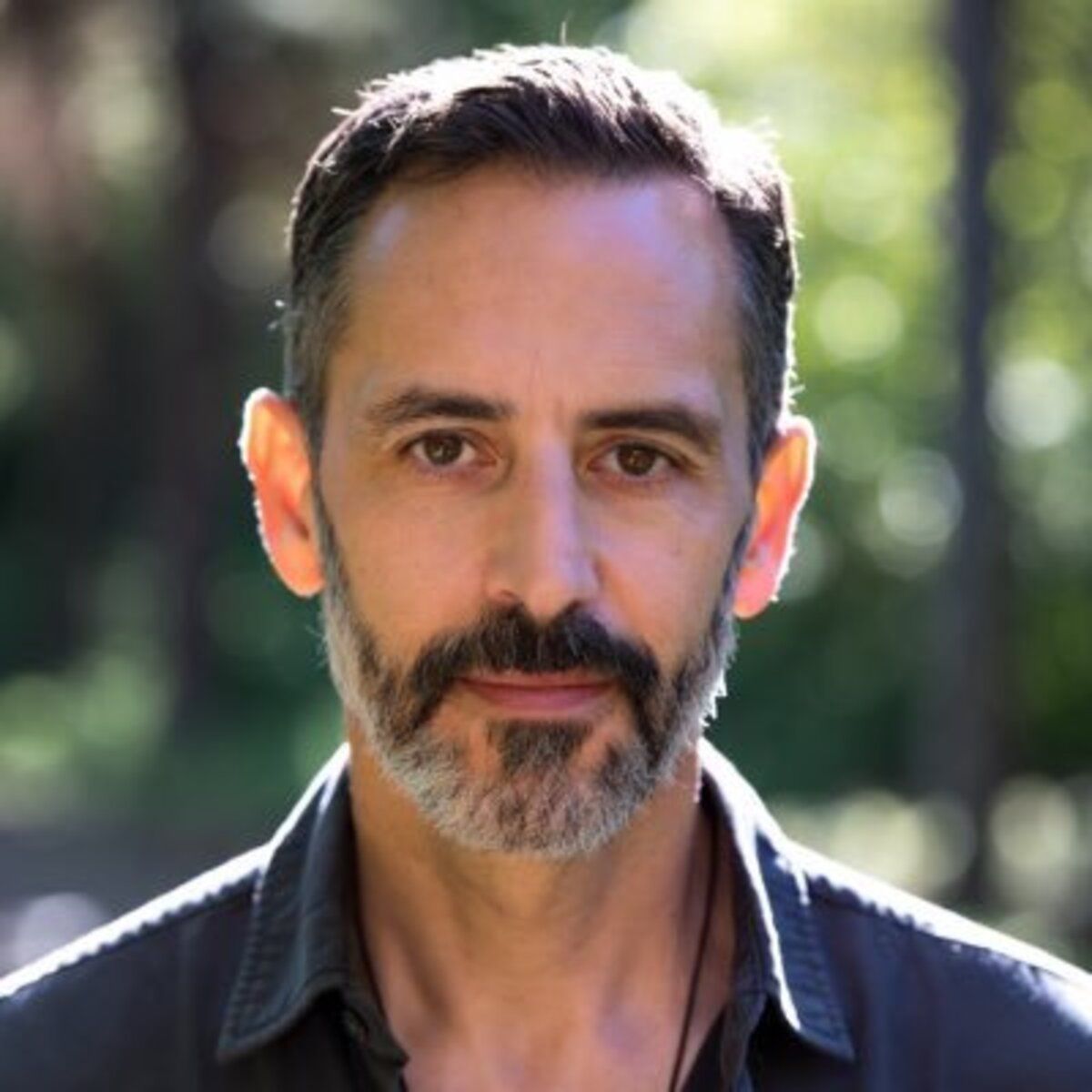
The dog had stage-four kidney disease and had fought it for a year, well past the point most animals get. Ridgway, who has spent two decades and four million subscribers building the McJuggerNuggets channel, called the animal a superhero and a fighter. He celebrated every extra day. He did what any of us would do for a creature we love facing a prognosis we hate. He refused to accept the number the doctors gave him.
Then, on June 3, he and his wife Ashley announced that an amniocentesis had confirmed their unborn son had Trisomy 21, Down syndrome, and that they had ended the pregnancy. Ashley had the procedure earlier that week. They filmed themselves opening the test results. Ridgway wrote that the decision would be better for the family in the long run, and that they hoped to try again for a better outcome.
The easy article here is the dunk, and a hundred thousand accounts have already written it. The dog lived because a man fought for him, and the boy died because that same man, looking at a harder fight, did the opposite. You don't need me to draw the hypocrisy.
I want to skip the dunk, because the dunk misses the only thing about this worth your time. Ridgway is not a uniquely cruel person. He's a clean, public, on-camera demonstration of how an ordinary person gets talked into something monstrous and never once feels the monster. The instrument that talked him into it is sitting right there in his own statement, and it's a word.
The sentence that gives it away
Read the sentence Ridgway used to explain himself. "When I first confronted this news, I was shocked but optimistic. If they're a little slow intellectually, then we'll make it work. I signed on to be a parent, come what may. But I just didn't fully understand what Down syndrome entailed."
Sit with the last part. He didn't evaluate a life with Down syndrome and conclude it wasn't worth living. He absorbed a picture of that life, and the picture made the decision for him. By his own account, the picture wasn't built from anything he had examined. It arrived pre-assembled, and he acted on it.
Scott Adams spent years teaching the concept that explains this better than the word hypocrite ever will. He called it opinion assignment. Events happen, and then people who are not you, the media you trust, the experts you defer to, the counselor across the desk, frame and edit and emphasize until the event arrives in your head as a finished conclusion. You don't remember being handed it. Over time it stops feeling assigned and starts feeling like a thing you reasoned your way to from the evidence. You didn't. The evidence never got a vote.
Ridgway told you the assignment worked. "I didn't understand what it entailed" is a man describing the moment he found out the picture in his head was the only thing he'd been running on. The tragedy is the order of operations. He made the irreversible decision first, and went looking for whether the picture was true second, in public, after the fact.
Before this turns into a story about one careless YouTuber, look at the number he cited himself. He said his doctors and counselors told him ninety percent of women terminate after this diagnosis, and that the figure shocked him. It should shock you too, because it means the picture in Ridgway's head is the picture in almost everyone's head. This goes well past one man's nerve. It's a near-unanimous cultural reflex, and reflexes that strong are never an accident. Somebody installed it.
The word is the anesthetic
Here is the same event in two vocabularies.
The first: a couple received a prenatal diagnosis, made the difficult and deeply personal decision to terminate the pregnancy, and are grieving the loss as they consider their family's future.
The second: a mother and father learned their son had Down syndrome and chose to end his life before he was born rather than raise him.
Same facts, same child. The only variable is the words, and the words change the entire movie. Adams called this two movies on one screen, and he called the trick of choosing the words that choose the movie a linguistic kill shot. The first version can't be read as cruelty, because every noun in it has been sanded smooth. Terminate. Procedure. The pregnancy, never the son. Products of conception, never the child. A better outcome, as though the boy were a result that came back wrong.
That's the mechanism the headline promised you. The word abortion, and the whole vocabulary that grew up around it, is a general anesthetic for the conscience. It lets a person do a specific, physical thing to a specific, individual human being and never once stand in the same room as what they did. Ridgway reached for that vocabulary on instinct. He called his son a pregnancy he terminated for a better outcome. He would have called the dog by name.
Watch what the word does to the conversation, too. The instant you file this under abortion, it inherits the armor of the entire abortion debate. My body, my choice. A private medical decision. Reproductive freedom. Those are real arguments that people hold sincerely, and every one of them is beside the point of what actually happened here, which is that a child was screened for a genetic trait and ended because he had it. The word routes the conversation away from that fact so efficiently that stating the fact out loud gets you called a zealot. Say plainly that ninety percent of one kind of human being is being eliminated before birth, and the vocabulary has already filed you under unreasonable.
The word does its heaviest lifting in the doctor's office. The standard screening pathway treats a positive Trisomy 21 result as a finding to be managed, and termination as the default next step rather than one option among several. Adams had a name for this structure, borrowed from sales: thinking past the sale. You don't ask the customer whether he wants the car. You ask whether he wants it in black or blue, and the having of the car is settled while he picks the color. A great deal of genetic counseling, however gently it's delivered, asks the parents what they want to do about the result, not whether the result is a problem at all. The whether is decided before they walk in. They just pick the color.
What eugenics actually is
So let's say the plain sentence and see what's on the table.
Screening a population for a genetic trait and preventing the birth of those who carry it has a name. It's eugenics. Specifically it's negative eugenics, the branch concerned with stopping undesirable people from being born, as opposed to the positive kind that tried to breed more of the desirable ones. That's the dictionary definition, used precisely.
The word carries the Nazi association for a reason, and it's worth getting the history exactly right, because the lazy version of the comparison is wrong and the precise version is devastating. People assume the Nazi horror was forcing women to bear children. It was the reverse. The 1933 Law for the Prevention of Hereditarily Diseased Offspring authorized the state to sterilize roughly four hundred thousand people judged genetically unfit. The T4 program, beginning in 1939, systematically killed somewhere between two and three hundred thousand disabled people, and it started with infants and small children. Doctors and midwives were required to report newborns with Down syndrome, with spina bifida, with what the paperwork called idiocy. Abortion, banned for healthy German women to keep the birth rate up, was permitted and encouraged when the child was expected to be defective. The Nazi state never forced anyone to raise a disabled child. It made sure the disabled child was never born, or didn't live long once he was. That was the entire point. They called it life unworthy of life.
Now hold that next to a screening program that ends ninety percent of Down syndrome pregnancies in the United States, closer to ninety-eight percent in Denmark, and effectively all of them in Iceland, where the government and press have at times described the country as having nearly eliminated Down syndrome. The mechanism is completely different. The Nazis used the state. What we use is ten thousand private decisions made by frightened parents in quiet offices, each one feeling like nobody's business but its own. The outcome is the same outcome. A category of human being is being removed from the population on the basis of a chromosome. Kristan Hawkins of Students for Life called Ridgway's decision morally bankrupt eugenics this week, and whatever you make of her politics, she reached for the correct technical term.
The 1983 picture
Which brings us back to Ridgway's confession, and to the part that should bother you most, because it's the fixable part and nobody's fixing it.
He didn't understand what it entailed. So what does it actually entail, in 2026, for a child conceived now who will live most of his life past 2045?
Start with the number that detonates the whole picture. In 1983, average life expectancy for a person with Down syndrome in the United States was about twenty-five years. Today it's about sixty. That's not a rounding error or a gentle trend. The lifespan more than doubled in four decades, mostly because we got good at repairing the heart defects that used to kill these kids young, and because we stopped warehousing them in institutions, which is where the grim Victorian picture of Down syndrome came from in the first place. The image in the culture's head, the one that made Ridgway's decision for him, is a photograph taken in a world that no longer exists.
Then look at how the people actually living this life rate it. Brian Skotko, a physician and researcher now at Massachusetts General Hospital and Harvard, ran the largest surveys of their kind around 2011. Among people with Down syndrome old enough to answer, ninety-nine percent said they were happy with their lives. Ninety-seven percent liked who they are. Among parents, a large majority said their outlook on life was more positive because of their child, and the divorce rate in these families runs lower than average, not higher. The ninety-nine percent figure the pro-life groups have been quoting all week is real, and it traces back to Skotko, not to a pamphlet.
That's the floor, today. The trajectory is what Ridgway never got told. A child with Down syndrome born now grows up alongside AI tools that can scaffold reading, speech, and independent living in ways that didn't exist when his older counterparts were born. Inclusive classrooms and supported employment went from rare to routine in a single generation. The research itself is moving, and here I'll be honest about where the line sits, because pretending otherwise would just be the optimistic version of the same dishonesty that got us here. Scientists have shown, in the lab, in cultured human cells, that the extra chromosome can be silenced or removed. That work is real and remarkable, and it is nowhere near a treatment for a living person, and it would not have helped Ridgway's son. I'm not selling anyone a cure. I'm saying the floor rises every year, the supports get better every year, and the decision being made on the 1983 photograph is forever.
This is where your instinct about the dog turns out to be the sharp end of the argument. Ridgway fought for the dog because he believed the dog had good days ahead. He gave up on his son because he'd been taught the boy didn't. The difference between the two decisions came down to a forecast, not a shortage of love. One creature got an optimistic forecast and a year of devoted care, and the other got a forecast written in 1983 and a procedure. A person who genuinely believes the future is getting better fights for the life in front of him. A person who's been sold, gently and from every direction, on the idea that it isn't will end that life and call it mercy. Whatever you want to name that underlying belief, it's despair wearing compassion's clothes.
The honest ledger
None of this means the hard parts aren't real. Roughly half of babies with Down syndrome are born with heart defects, though most are now surgically repairable, which is a big part of why the lifespan tripled. There are higher rates of hearing and vision trouble, of thyroid disease, of childhood leukemia. The hardest one is that nearly everyone with Down syndrome develops the brain plaques of Alzheimer's by their forties, and a majority go on to clinical dementia. A family saying yes to this is saying yes to real medical work and, often, to an early goodbye. That's the honest ledger, and Ridgway was right that most people never see it laid out.
But notice which way even that hardest fact is moving. Because people with Down syndrome carry an extra copy of the chromosome that produces the Alzheimer's protein, they've become one of the most important populations in Alzheimer's research, and the first drugs that actually clear those plaques reached the market in 2023 and 2024. The same condition that carries the risk is helping crack the disease behind it. Put the whole ledger on the table, debits and credits, and it still reads as a life. A hard life in places, a joyful one by the testimony of the people living it, a steadily improving one on every axis we can measure, and nowhere on that ledger is there a reason ninety-nine of a hundred of these children should be stopped before they start.
About Ridgway
A word about the man himself, because how you treat him is the whole test.
He and Ashley are getting death threats. People are in their mentions wishing harm on them by name. That's grotesque, and if you're cheering it, you've turned into a worse thing than the one you're angry at. They lost a child this week, by their own choice, yes, but under real fear and with bad information, and a mob screaming at them is not on the side of life in any sense the word can carry. You can hold that a decision was wrong and still refuse to torch the people who made it. That used to be the entire moral teaching of the side now holding the torches.
I'm writing this down for one reason: the same word that anesthetized them is sitting in your vocabulary too, fully loaded, and not only on this subject. Feeling superior to Jesse Ridgway is the cheap move. The useful one is to ask where a comfortable word has been making your hard decisions for you, so smoothly you never noticed a decision was being made.
Say it without the word
This generalizes well past abortion. When a choice feels easy and the language around it feels soft, stop and say the thing in plain words. Use the word nobody reaches for, the one that doesn't let everyone in the room keep their lunch. Then check whether you still believe what you believed a second ago.
Terminate the pregnancy becomes end my son's life because he has Down syndrome. A better outcome becomes a different child instead of this one. A clump of cells becomes a boy who, by the numbers, would have liked his life and liked who he was. Maybe you say the plain sentence and you still mean it. Some people will, and that's their conscience to carry. But that ninety percent measures the reach of a word, not the verdicts of parents who stared the plain sentence in the face and chose anyway. The word did the looking for them.
The masses never decided to practice eugenics. Nobody held a vote. They were handed a vocabulary smooth enough that the decision slid past without ever being made, and a picture old enough that the future never got entered into evidence. Ridgway's son is what that costs, one child at a time, ninety times out of a hundred. The least we can do is take the anesthetic away and make the choice be a choice again. Say it without the word. If it still sounds like mercy, fine. If it suddenly sounds like something else, then something else is what it always was.